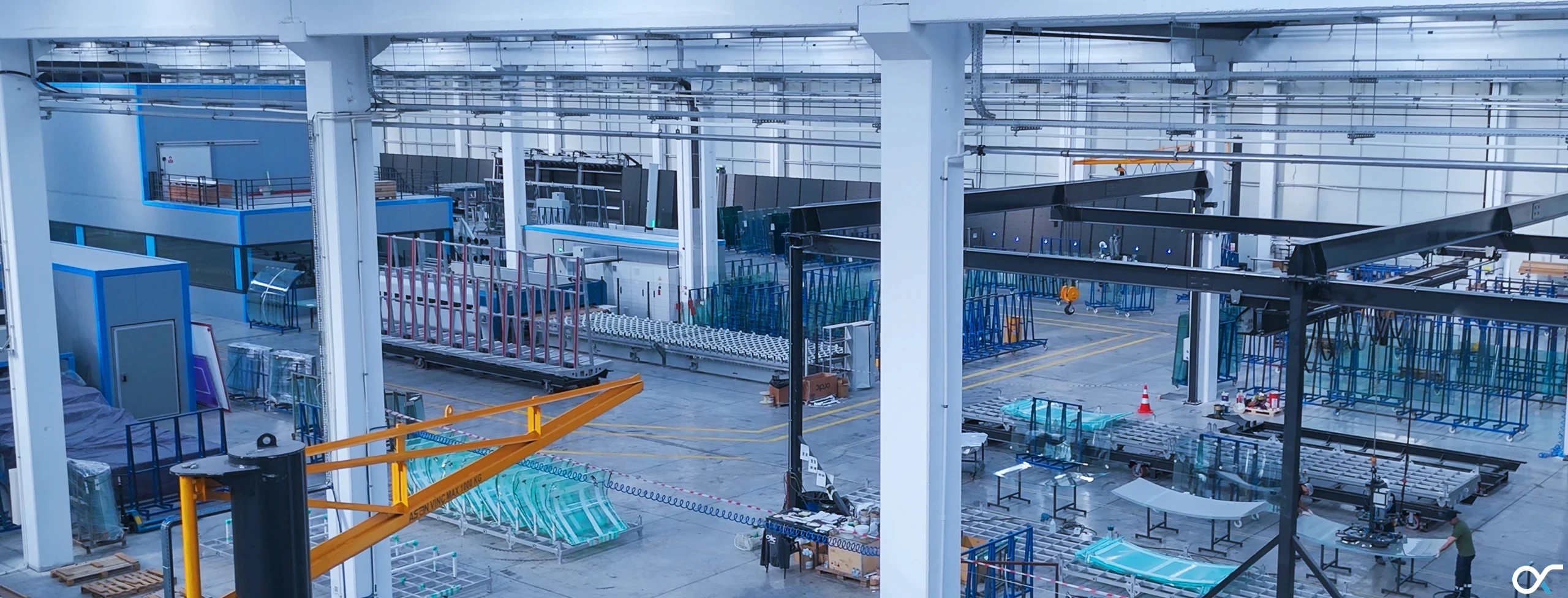
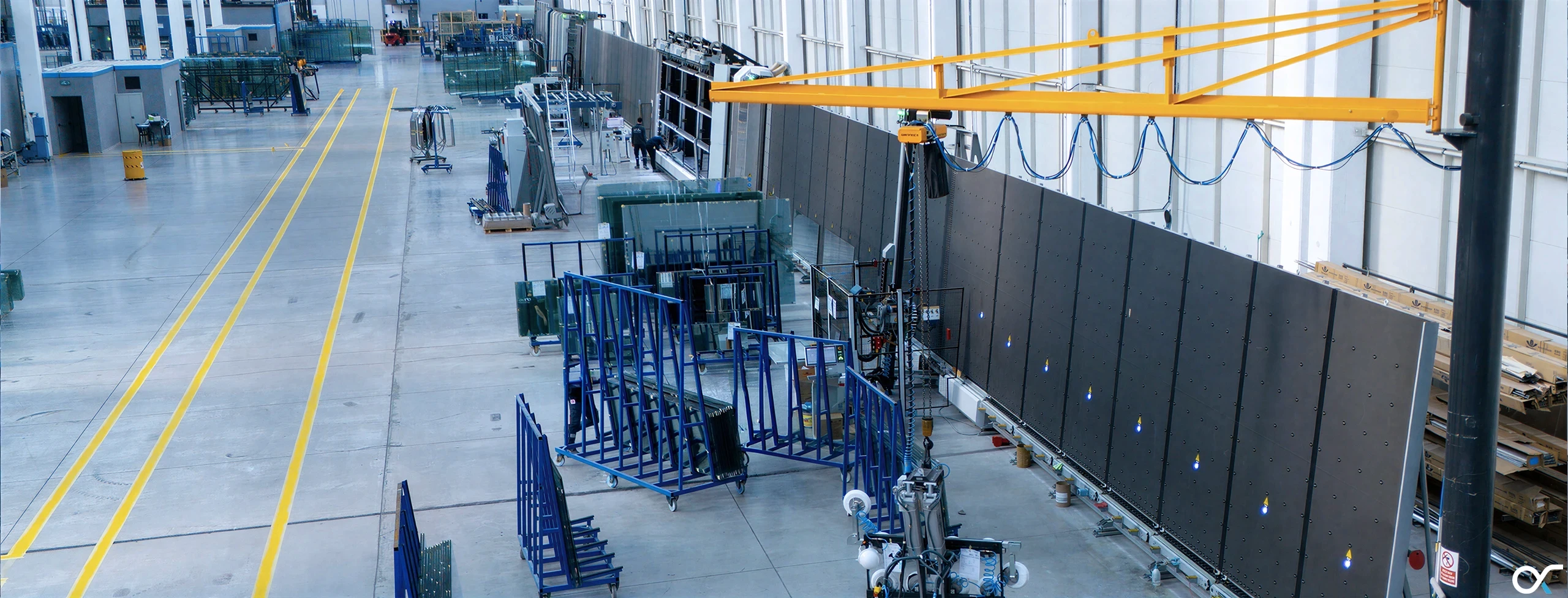
Insulated Glass Production Lines
Insulated Glass Production Lines
40+ years of experience
Selected as the Best Glass Manufacturer of 2025
Insulating Glass in Architecture
Energy Efficiency: The primary function of insulating glass is to reduce heat transfer. It helps maintain a stable indoor temperature by minimizing heat loss in winter and reducing heat gain in summer. This leads to lower energy consumption for heating and cooling.
Soundproofing: Insulating glass also improves sound insulation, which is essential for buildings located in noisy urban environments or near highways. This contributes to the comfort and privacy of the occupants.Aesthetics and Transparency Insulating glass allows for large windows and glass facades without sacrificing energy efficiency. Modern architecture increasingly uses glass to create a feeling of openness, and double or triple-glazed units enable this while maintaining energy standards.
Use of Area in Architecture with Insulating Glass
Optimizing Natural Light: Insulating glass allows architects to design spaces with large windows and skylights, maximizing natural light without causing energy inefficiency. This can reduce the need for artificial lighting, improving both aesthetics and energy use.
Expanding Living Areas: In residential architecture, the use of insulating glass in patio doors or floor-to-ceiling windows can create a seamless connection between indoor and outdoor spaces. This enhances the perception of space and creates more usable areas, such as sunrooms or enclosed balconies.
Zoning and Environmental Control: Insulating glass is often used in glass partitions or internal glass walls in commercial or office buildings. These can divide spaces while maintaining an open, airy atmosphere and controlling temperature across different zones.
Key Architectural Applications of Insulating Glass
Curtain Walls: Many modern high-rise buildings use insulating glass in curtain wall systems. These are non-structural glass facades that provide insulation while letting in natural light.Atriums and Skylights: Insulating glass allows for the creation of large, open atrium spaces or skylights without significant energy loss, giving a building a spacious and well-lit feel.Greenhouses and Solariums: Insulating glass is frequently used in greenhouses or solariums, where the goal is to create a warm, light-filled environment that remains energy-efficient.
Architectural Trends with Insulating Glass
Passive Solar Design: Buildings are designed with large, south-facing insulating glass windows to capture solar heat in winter while minimizing heat loss, reducing the need for artificial heating.Minimalist Design The use of glass facades and open spaces, enabled by insulating glass, aligns with minimalist architectural trends, which emphasize clean lines, simplicity, and a connection to the outside environment.Sustainable Architecture Insulating glass is a core element in sustainable or "green" building certifications like LEED (Leadership in Energy and Environmental Design). It contributes to the overall energy efficiency and sustainability goals of a building project.
Thermal Zoning and Spatial Use
Insulating glass can help in creating distinct thermal zones within a building, enabling efficient use of heating and cooling in specific areas. For example:Sun-facing rooms can benefit from insulating glass to retain heat in the winter, while keeping out excessive heat in the summer.Cooler zones can be created in north-facing rooms, where insulating glass minimizes heat transfer, maintaining a cooler environment naturally.